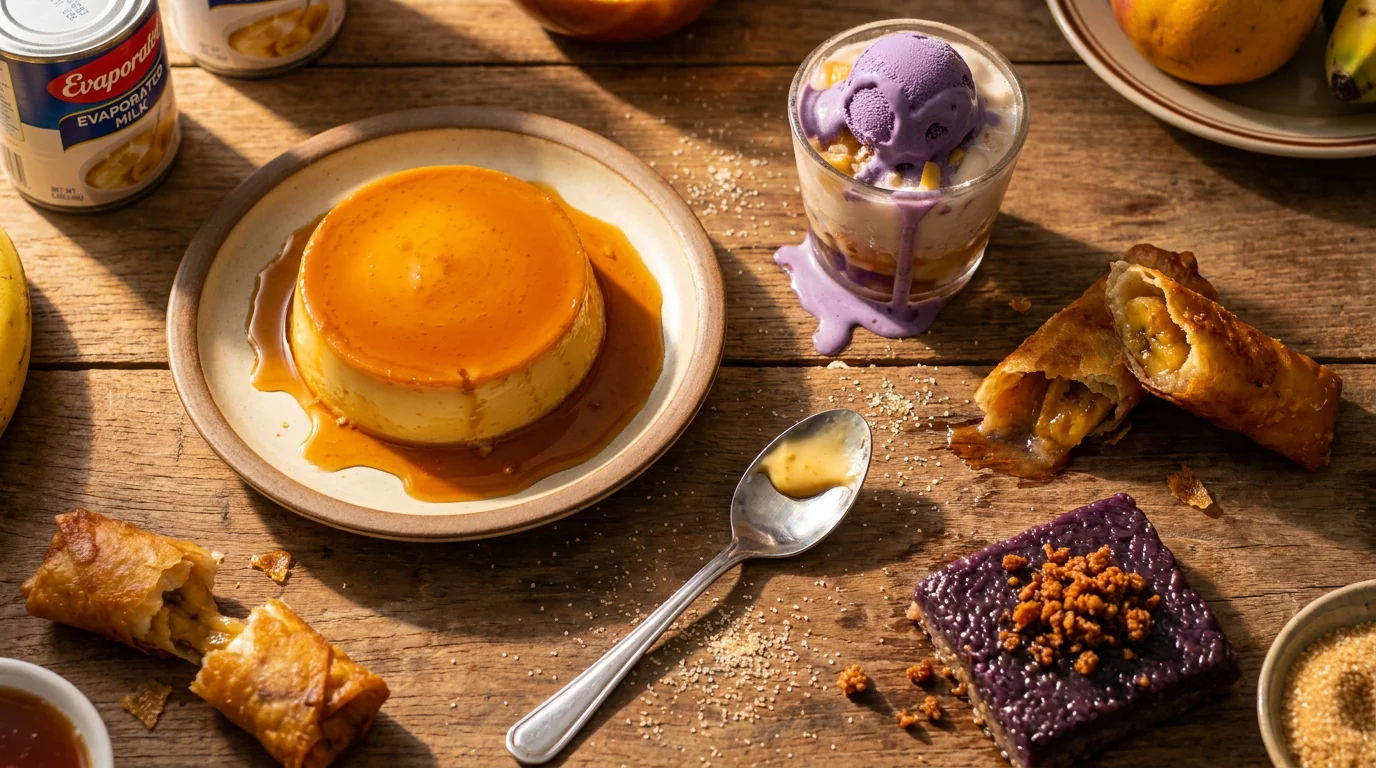
A spread of Filipino desserts — halo-halo, leche flan, and ube halaya — on a warm wooden table

A Filipino dessert journal

Sweet, from our
table to yours.

Twenty-three beloved desserts — from leche flan and halo-halo to bibingka, sans rival, and ube pie — traced from their home-style roots to the modern plates that made them famous.

məˈtɑː·mɪs  ·  adjective, Tagalog — sweet

The Story

Where heritage meets the modern table.

Filipino desserts are stories you can eat — of Spanish galleons and Japanese shaved ice, of grandmothers stirring purple yam over a low flame, of fiestas where the table groans with sugar and coconut.

Matamis is a small, loving study of twenty-three of them. For each dessert we keep two recipes side by side: the traditional version our lola would recognize, and the modern riff that made it famous again — the ube flan, the minimalist halo-halo, the burnt basque cheesecake.

The idea is simple: honor the roots, celebrate the reinvention. Every recipe here is researched from trusted Filipino kitchens, with complete steps you can actually follow.

The Collection

23 desserts, two ways.

46 recipes — tap any card for the full ingredients and method.

Traditional vs Modern

A tale of two kitchens.

Traditional

Lutong-bahay

Where the story begins

More than a way of cooking, lutong-bahay is food rooted in family, patience, and memory. These are the dishes passed from one generation to the next — often learned by watching, tasting, and cooking beside someone we love. Simple ingredients, familiar flavors, and time-honored methods make every meal feel like a return home.

Why it matters: It preserves more than recipes. It keeps family stories, traditions, and a sense of belonging alive through food.

Modern Famous

The Reinvention

Tradition, seen through a new lens

Modern Filipino food takes the flavors we grew up with and gives them new ways to be experienced. Ube finds its way into custards and pastries, halo-halo is reimagined with new textures and presentation, and familiar ideas meet techniques and influences from around the world. The form may change, but the connection to our roots remains.

Why it matters: Reinvention allows a living food culture to grow. It introduces Filipino flavors to new generations and new audiences while giving us another way to celebrate where those flavors came from.

The real story is not traditional versus modern. It is tradition becoming the foundation for something new. One protects the memory; the other carries it forward. Both have a place at the Filipino table.